 Cart
Cart
 Sign In
Rule of Thumb: Choose PET when you need excellent dimensional stability, low moisture absorption, and consistent machining tolerances. Choose Nylon when you need toughness and wear performance, and you can accommodate moisture absorption or specify a stabilized grade.
PET (Polyethylene Terephthalate)
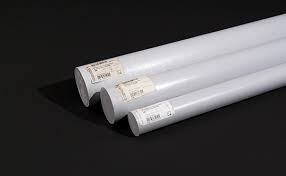
PET is a semi-crystalline engineering thermoplastic produced by polycondensation of ethylene glycol and terephthalic acid. It exhibits low moisture absorption (typically under 0.1% at equilibrium), excellent dimensional stability, and consistent, predictable machining characteristics. These properties make PET well-suited for precision components requiring tight tolerances in variable humidity environments. Its compressive strength and wear resistance are adequate for many bearing and wear pad applications, though it offers less impact toughness than Nylon. PET is commonly specified for structural machined parts, food-contact components, and applications where dimensional consistency under service conditions is the primary requirement.
Nylon
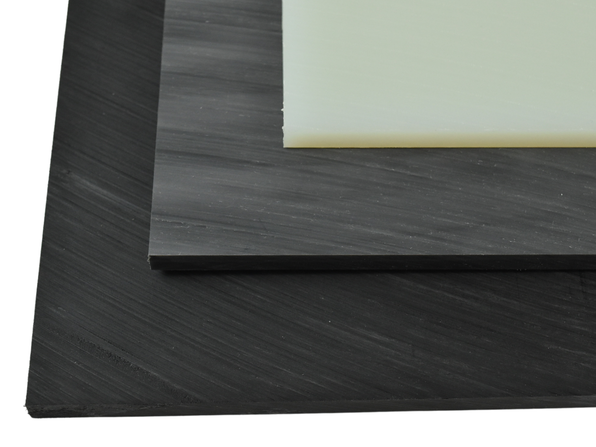
Nylon is a semi-crystalline engineering thermoplastic available in several grades, most commonly Nylon 6 and Nylon 6/6. It is characterized by high toughness, good fatigue resistance, and strong wear and bearing performance, making it a standard choice for gears, bushings, rollers, and other dynamic load-bearing components. Nylon absorbs moisture from the surrounding environment, which can produce dimensional change and reduced stiffness—an important consideration for tight-tolerance applications. Where moisture exposure is a concern, moisture-stabilized or glass-filled grades are commonly specified to mitigate hygroscopic effects while preserving the material's inherent mechanical properties.
PET Applications
- Food processing machine components
- Packaging and conveyor machinery parts
- Bearings and bushings
- Wear pads and liners
- Wheels and rollers
- Valve bodies and manifolds
- Filler pistons
Nylon Applications
- Bearings and bushings
- Gears and sprockets
- Rollers and wheels
- Wear pads and slides
- Seals and gaskets
- Food processing and packaging machinery parts
PET Common Brands
- Sustadur PET, TECAPET™ PET, Ertalyte®
| Characteristic | PET | Nylon |
|---|---|---|
| Strong and stiff | ||
| Good bearing and wear performance | ||
| Good chemical resistance | ||
| Easy to machine | ||
| Low moisture absorption | ||
| Low thermal expansion | ||
| Stain resistant | ||
| High impact toughness | ||
| Reduces wear on mating parts |