 Cart
Cart
 Sign In
Differences Between UHMW and Nylon
UHMW (ultra high molecular weight polyethylene) is an extremely tough plastic with high abrasion and wear resistance. The versatility of polyethylene has made it a popular plastic for countless industrial applications that require durability, low friction, and chemical resistance. Applications include UHMW wear strips, chain guides, packaging machinery parts, and marine dock fender pads.
Nylon is a strong, stiff engineering plastic with outstanding bearing and wear properties. Nylon is frequently used to replace metal bearings and bushings often eliminating the need for external lubrication. Other benefits include a reduction in part weight, less operating noise, and decreased wear on mating parts.
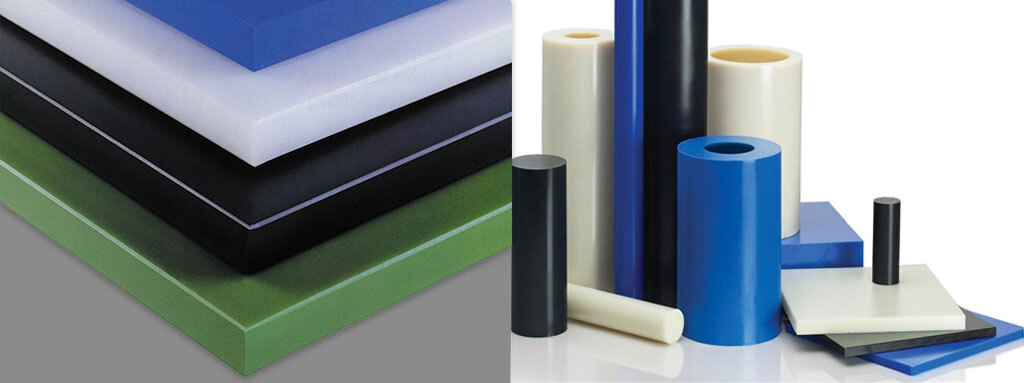
UHMW Material Characteristics |
Nylon Material Characteristics |
|---|---|
| Good chemical resistance Easy to fabricate Extremely tough and durable Excellent abrasion resistance Low friction Low moisture absorption |
Good chemical resistance Easy to fabricate Strong and stiff Excellent bearing and wear properties Reduced noise, weight, and wear of mating parts Easy to machine |
UHMW Applications |
Nylon Applications |
| Packaging machinery parts Food processing machinery parts Wear strips and guide rails Chute, hopper, and truck bed liners Star wheels and idler sprockets High speed conveyors Bumpers, pile guards, and dock fenders |
Packaging machinery parts Food processing machinery parts Wear pads Bearings and bushings Gears Wheels Rollers Seals and gaskets |
UHMW Common Brands |
Nylon Common Brands |
| Polystone® M, Tivar®, GUR®, LubX® | SUSTAMID®, TECAMID®, NYCAST® |
Typical Properties of UHMW vs. Nylon
| Property | Units | ASTM Test | UHMW-PE | Nylon |
|---|---|---|---|---|
| Specific gravity (73°F) | – | D792 | 0.93 | 1.14 |
| Tensile strength (73°F) | psi | D638 | 3,100 | 12,400 |
| Tensile elongation (73°F) | % | D638 | 350 | 90 |
| Flexural modulus of elasticity (73°F) | psi | D790 | 110,000 | 410,000 |
| Hardness Rockwell M&R, Durometer Shore D (73°F) |
scale as noted | D785, D2240 |
Shore D 64 | M85, R121, Shore D 80 |
| Izod impact (notched, 73°F) | ft-lbs/in | D256 | 18.0* | 1.2 |
| Coefficient of friction | – | Dynamic | 0.10 – 0.20 | 0.28 |
| Coefficient of linear thermal expansion | in/in/°Fx10-5 | D696 | 11.1 | 4.5 |
| Heat deflection temperature (66 psi/264 psi) | °F | D648 | – | – / 194 |
| Maximum continuous service temperature in air | °F | – | 180 | 210 |
| Water absorption (immersion 24 hours) | % | D570 | slight | 1.20 |